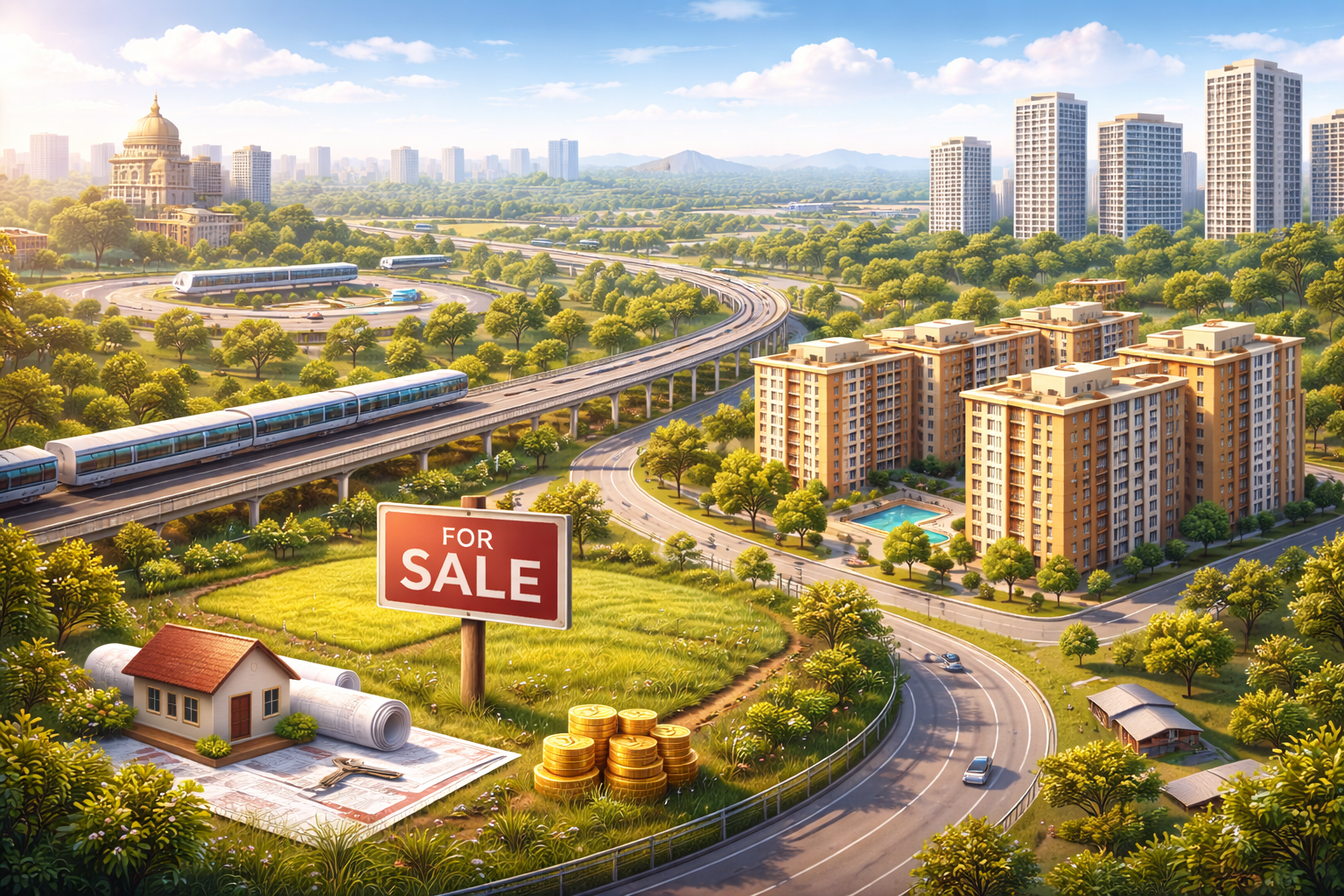
How Metro Expansion and Tech Corridors Are Reshaping Property Demand
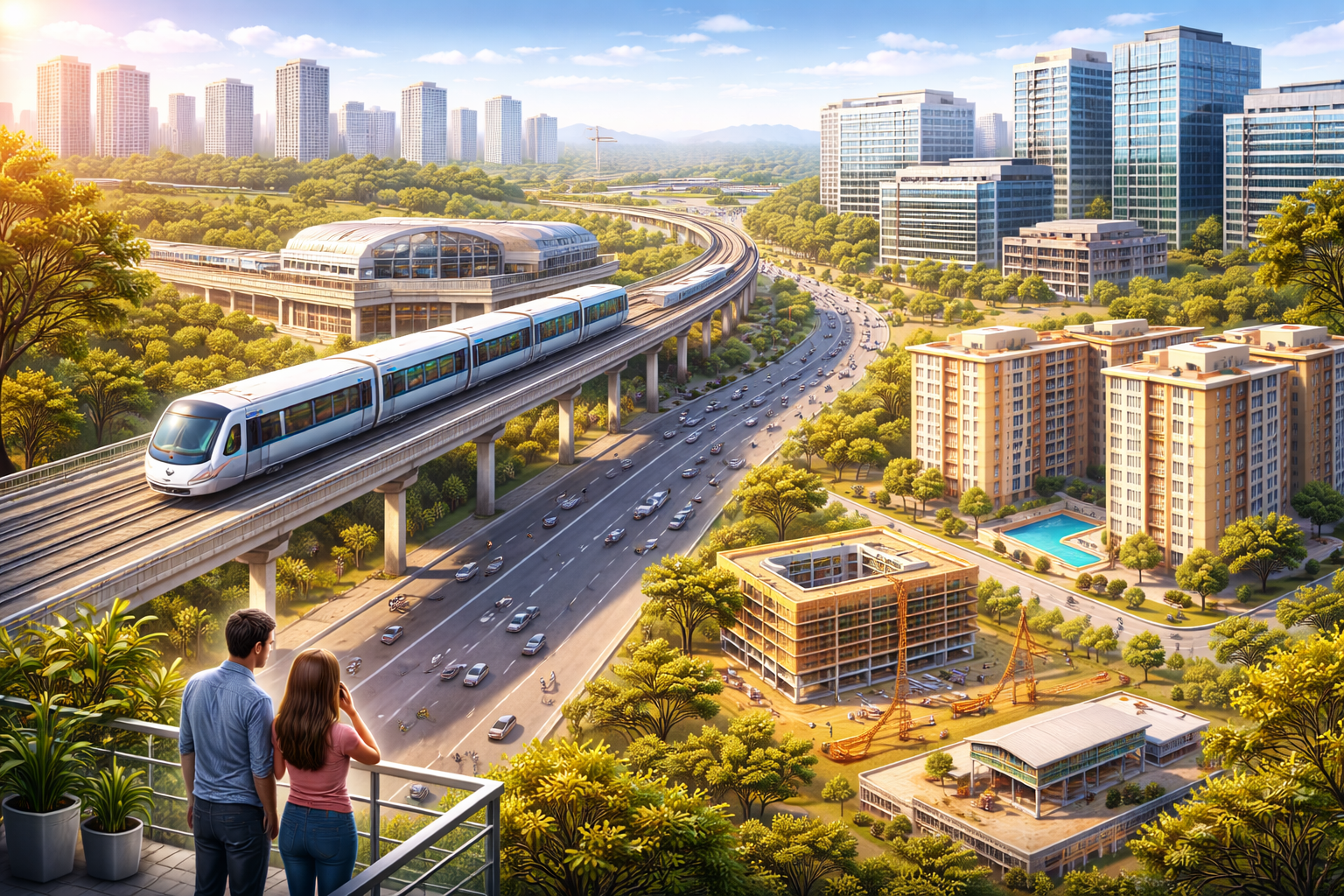
Bangalore’s real estate market has always been closely tied to two powerful growth engines :
🚇 Metro Expansion
💻 IT & Tech Corridor Development
Together, these forces are transforming where people choose to live, rent, and invest. Areas that were once considered “far” or “undeveloped” are now emerging as high-demand residential and commercial hotspots.
Let’s explore how infrastructure and employment hubs are reshaping property demand — and what it means for buyers and investors.
🚇 1️⃣ The Metro Effect : Connectivity Drives Value


Metro connectivity changes everything.
Why?
- 🔴 Reduces commute time drastically
- 🔴 Improves access to business districts
- 🔴 Reduces traffic dependency
- 🔴 Increases rental demand
Properties within 500 meters to 1 km of a metro station often experience :
✔ Faster appreciation
✔ Higher rental occupancy
✔ Better resale liquidity
Buyers increasingly prioritize walk-to-metro convenience, especially working professionals.
💻 2️⃣ Tech Corridors : Employment Creates Housing Demand


Bangalore’s growth is fueled by IT hubs such as :
- 🔴 Whitefield tech cluster
- 🔴 Electronic City
- 🔴 Outer Ring Road corridor
- 🔴 North Bangalore business parks
When thousands of professionals work in a zone, housing demand naturally follows.
Impact on Property Market :
- 🔴 Surge in apartment rentals
- 🔴 Increased demand for premium villas
- 🔴 Rise in co-living and gated communities
- 🔴 Appreciation in plotted developments nearby
Tech corridors create sustained, long-term housing demand, not temporary spikes.
🏗️ 3️⃣ Emerging Micro-Markets Around Infrastructure Nodes



When a metro line or tech park is announced, nearby micro-markets begin to transform.
What typically happens :
- Land prices rise first
- Developers launch apartment projects
- Social infrastructure follows (schools, malls, hospitals)
- Rental demand stabilizes
- Commercial spaces increase
Early investors often benefit the most — especially in plotted developments near upcoming infrastructure.
🏢 4️⃣ Shift in Buyer Preferences

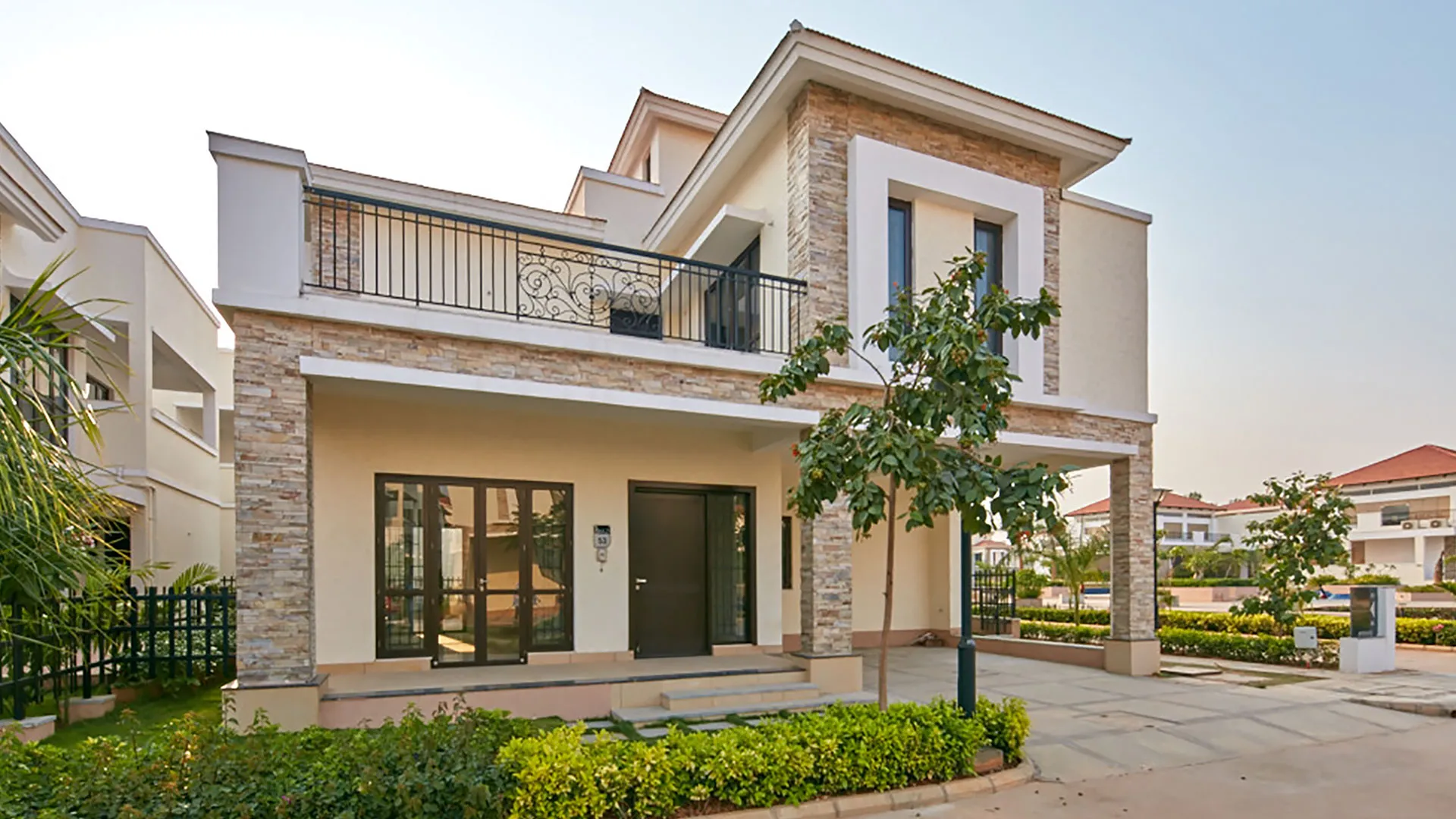
Metro expansion and tech employment hubs have reshaped buyer psychology.
Today’s Buyer Priorities :
✔ Proximity to workplace
✔ Access to metro/public transport
✔ Gated security
✔ Amenities (gym, co-working spaces, clubhouse)
✔ Future resale value
Working professionals prefer :
- 🔴 Apartments near IT parks
- 🔴 Compact homes with connectivity advantages
Families prefer :
- 🔴 Villas slightly away but well connected
- 🔴 Quiet neighborhoods within 20–30 minutes of tech zones
Connectivity now outweighs central location.
📈 5️⃣ Investment Impact : Short-Term vs Long-Term Gains
Metro and tech corridors affect property types differently :
🌾 Plots
- 🔴 Benefit early when infrastructure is announced
- 🔴 High appreciation potential over 5–10 years
🏢 Apartments
- 🔴 Immediate rental demand boost
- 🔴 Faster liquidity
🏡 Villas
- 🔴 Lifestyle appreciation in premium corridors
- 🔴 Moderate but stable long-term growth
Smart investors analyze :
- 🔴 Upcoming metro routes
- 🔴 Government-approved tech parks
- 🔴 Road expansion projects
- 🔴 Commercial development pipelines
Infrastructure announcements often create the first wave of appreciation.
🌆 6️⃣ Case Pattern Seen in Bangalore
Historically, areas near major IT corridors and metro lines have shown :
- 🔴 Consistent price growth
- 🔴 Strong rental yields
- 🔴 Lower vacancy rates
- 🔴 Higher buyer confidence
This pattern continues as new phases of metro expansion and business districts evolve.

🔍 What Smart Buyers Should Do
Before investing in an “upcoming” location :
✔ Verify metro timeline (not just announcement)
✔ Check RERA status of projects
✔ Analyze surrounding commercial growth
✔ Compare current price vs future potential
✔ Study rental demand in the micro-market
Not every announced corridor guarantees immediate growth — execution matters.
🏙️ The Bigger Picture
Metro expansion and tech corridors are not just infrastructure projects — they reshape :
- 🔴 Urban expansion patterns
- 🔴 Rental economics
- 🔴 Land value cycles
- 🔴 Residential demand clusters
Bangalore’s property market is increasingly becoming connectivity-driven rather than city-center driven.
Final Thoughts
In modern urban real estate, connectivity equals value.
🔴 Where the metro goes, demand follows.
🔴 Where tech jobs grow, housing expands.
For investors and homebuyers alike, understanding infrastructure and employment maps is key to making smart property decisions.
Related Post